Showing posts with label Language & Social Science. Show all posts

Monday, 16 November 2020

Teaching Critical Thinking through Big History - The Big Bang


There's got to be a million reasons why I love teaching Big History to my 8th graders. But the first and foremost is that it leads to wonderful discussions in the classroom - which afford me a peek into the minds of my students and how they are developing various skills. Another facet of the course is its strucutre and how it develops vital academic skills in students - critical thinking, evaluation, argumentation based on evidence, deep reading and high quality written communication.

We recently started up the 2nd Unit on the Big Bang. The first activity required students to think up of a natural disaster and then list causes that led to it - in the short, medium and long term.  The students worked for this assignment using the Breakout Rooms feature in Zoom. As I kept popping in and out of their rooms, I witnessed interesting discussions. One of the teams had chosen the 2004 Tsunami - they listed the earthquake in Indonesia as the immediate cause but were able to go back further into continental drift to use plate shift tectonics as a core reason. They were further back into the formation of the earth's crust and mantle to explain how plates were formed and are constantly moving even today - which led to the earthquake and therefore the tsunami.

The Vocab Wall activity was an incredible way to help students and deepen enhance their understanding of word meanings. Each student was assigned 2 words which they had to research - meanings, synonyms, antonyms and context. Words ranged from "parallax", "evidence", "intuition", "astronomical" & "hydrogen".  Then they had to browse the BH unit to find their word's usage in articles or activities. Finally we had a WORD WAR - where students had to justify using evidence why their word was the most important word in the entire unit. For this, the students really had to understand the context in which the word was used. Next, they had to identify another word in the list which was connected with their word. Again, they had to justify their connection. Students readily challenged each other's arguements. Some also stepped into to support a flailing classmate - which reflected a sense of empathy and connection. 

From there we dived deeper into understanding what the Big Bang was through videos and discussions. The article on Complexity provided a context for how each Threshold emerged through Goldilocks conditions which provided increasing complexity.  

Today we worked on understanding a graphical representation of the first threshold and students had to come up with interesting hashtags to briefly summarize their understanding. Hashtags ranged from #beginnings, #allmatter, #lifebegins, #whereallenergywas released.

We watched the Big Bang video and classified learning into the S-E-C model - Support - Extend - Challenge. For this activity, use used the Zoom Whiteboard where students could collaboratively add their ideas in real time. We discussed how it was easy to identify ideas which "Supported' our thinking and also those which "Extended" our thinking, but extremely difficult to find ones which "Challenge" our thinking. I told the students that they should constantly be aware and analyze the readings for such ideas and tease them out - a good pointer on metacognition and deeper thinking.  

For next time, they have to do a "Literature Review" by finding and reading articles on the latest scientific understanding of the Big Bang and make a group presentation. They have to use their newly learned skills on Claim Testing to evaluate the authenticity of the article and website by assessing whether the author of the article is an "authority" on the subject or not.  We discussed how "authority" can be achieved - through education, experience and reputation in the field, but how also, "authority" is sometimes attributed implicitly and incorrectly based on race, gender or socio-economic condition. This led to a discussion on how women scientists and mathematicians often have a battle on their hands to garner equal respect and authority for their work as men. 

Truly, teaching Big History can give any educator a well deserved buzz, especially in these trying times of school lockdowns. 

Friday, 25 September 2020

Teaching Visual Critical Thinking IX - Is that an Idly Grinder in a lab?

Our classes on Visual Critical Thinking continue, adding an incredible dimension to teaching and learning at Al Qamar Academy.

Today I used this picture for the visual critical thinking skills discussion in today’s class.  Please do click on the llink and see the picture before proceeding.

The students  were given 2 driving questions to ponder over - What they thought was going on in the picture with evidence to support their ideas, & To use observations and inferences to explain what they thought was happening in the picture.

Shahul observed that the picture showed a group of people working on a rotating grinder and not like scientists.  

Izzy stated that it looked like a factory setting where the people were sanitised and wore masks. He concluded that they were making cheese in a factory and all were looking at ripe cheese.  They looked like Asians while one looked Chinese as observed from his facial features.  

Ruqayya concurred with Izzy that it looked like a cheese factory as the people all wore gloves as they were handling cheese.  The big container looked like where the whey and curd/cheese were separated.  She observed that the parts sticking out from the big container looked like spinners on which the container spun around.  She noticed the racks at the back which could have been used to store the cheese and that the cheese wasn’t done yet.  She noticed that the visitors were taking down notes but was unsure about what.  She also had no idea on the purpose of the posters and bottles seen in the background.  She also observed one of the people wore headphones while few wore masks and gloves.

Mooz declared that they looked like scientists visiting a science lab in a different country for they had visitor badges on their coats.  Although they wore masks, there was  no social distancing and they might be testing and checking a cure for some kind of virus.

Cessie said that they looked like medical students or maybe scientists with two of them being visitors while the others were doctors and volunteers. She assumed the two visitors were from another lab or university who had come to observe an exhibit or some new discovery as they wore masks and gloves and took notes while the others observed.  She noticed some posters in the background on the walls that mentioned something about a Cold Box, Tail and Product but had no idea about it.  

Afrah disagreed with Izzy and Ruqayya.  She mentioned that the men looked like chemists with two among them being visitors from maybe a university as the badges on their coats revealed.  They seemed to be observing and writing what seemed like an experiment.  The setting was more like a lab which consumed electricity as there was a big electric box in the background.  There may be something contagious, the reason for their wearing gloves and masks, for they may be looking for a cure for some disease.

When I asked them to observe what was sticking out of the machine with what looked like an opening or outlet in the big container, only Afrah articulated that they looked like huge copper nuts and bolts.  She believed that it was part of some circuit and couldn’t be a grinder or cheese separator.  She remarked that the people were not lookng inside but away from the machine, probably observing some output on a screen in the distance.

I asked the students whether it was possible that a factory could have one machine without any other machinery in sight and whether the door behind the room could be open if the process  involved dairy products.  Afrah also noticed that the sign on the wall about a cold box had a yellow triangle which usually meant something hazardous which is only possible if the setting was a lab rather than a factory.

At the end of the class, I revealed the caption to them that they were inspectors from the International Atomic Energy Agency at a nuclear site south of Teheran. The article mentioned that Iran had begun to conduct work on advanced centrifuges- the equipment that spun at supersonic speed to purify Uranium, a fuel for nuclear power and nuclear weapons.

We concluded that in all probability what was seen might be a centrifuge used to purify uranium.  Ruqayya was sad that she couldn’t guess accurately because of her lack of knowledge on history or nuclear power.  Mooz, Cessie and Izzy weren’t too happy either that they hadn’t been even close to guessing the right answer.  Afrah was sure that she knew from the beginning that it was some kind of a lab with chemists working and was well pleased that she was close to the outcome of this activity but was surprised to note that what looked like a huge Idly grinder could actually spin at supersonic speed.

To be able to keenly observe and modify one’s thought process, based on different perspectives presented by peers, is a skill.  Today, I was impressed by Afrah – she demonstrated critical decision making which involved calmness, clarity, and conviction in her inference. Additionally she was able to explain her observation, reasoning and conclusions in plain language to her peers.


Note : Student chosen aliases have been used instead of real names.  The link to the article with the actual picture has been provided below: 

https://www.nytimes.com/2019/10/20/learning/whats-going-on-in-this-picture-oct-21-2019.html


Saturday, 12 September 2020

Teaching Visual Critical Thinking VIII : Parkour here?

Language teaching integrates a number of different facets - in fact, taught well, it leads to development of metacognition skills in students. Recognising this greater goal of language teaching, we teachers at Al Qamar Academy have been working with our Middle school students to develop their Visual Critical thinking skills by using resources from the New York Times Learning Network, specifically, the What’s Going On In This Picture.

This time, I selected a mesmerizing photograph which juxtaposes several contrasting elements.  Before reading further, do view the photograph here

I asked my 8th graders to carefully study the photo for a few minutes and jot down their observations and thoughts.  What could be happening here? What could be the explanation?

Initially, several of the students thought the photo was a scene from a movie. Or photoshopped. The surreality of the picture lent itself well to this explanation. They observed the contrast of the background with the flippant activity (pun intended) of the man. Why would anyone be doing perfect flips in this completely bombed out locale. They noticed the fire still burning in one of the buildings and the rubble and concrete that littered the street. Two kids quickly identified that the man was doing parkour. The angle of his position was professional - he wasn’t just jumping around - he was good! 

Somebody wondered if this was a military training camp. That kind of explained the casual nature of the two boys in the picture - the rubble and destruction seems normal. But then another student pointed out that children wouldn’t be allowed to wander around in a military training camp. 

What about a construction site? Where the destruction of the buildings was a planned and normal event. Nothing horrific associated with that. But then other kids commented that a demolition in construction sites would be more planned. This area clearly looked as if it had been bombed. 

The children were trying to reconcile the apparent and widespread destruction with the casualness of parkour. Nothing else seemed to fit.

Then a child commented “What if there was a bomb blast. And the boy was thrown by the impact. But again - that didn’t work. The flip was deliberate and professional. The feet were pointed at the correct angle. The other boy in the picture too seemed calm and collected. No fear or panic.

What if there was an earthquake? And the buildings had collapsed. But then other children pointed out that the buildings in the background were still standing. They would’ve also collapsed or been damaged in an earthquake.  

“Maybe he’s doing the parkour to post on social media” guessed a student. Another student took up the thread “There must be something important enough happening if this photo was taken to be posted on social media.” 

The children finally concluded that this was a picture from a war torn zone. The bombing had probably not been recent - the onlooker was not in a panic. Additionally, the photographer had the time to frame a high resolution picture of the scene. So s/he must have planned to take the picture.  The children guessed that the location must have been somewhere in Afghanistan, Lebanon or Iraq.

Finally, one student guessed the correct place - “Palestine”. Another student explained the rationale behind the picture - “A  picture of a bombed out neighbourhood wouldn’t catch attention. But this kid doing parkour here would!” I revealed the story behind the picture - where a group of young Palestinian boys do parkour and post pictures on social media to garner attention about the life under colonization.  The final question posed by a student should give a lot of us adults food for thought “The Promised Land doesn’t deserve war. Religion doesn’t deserve war!”

The entire exercise took an hour. It was a testimony to the endurance of the children that they kept noticing further details and trying to reason out an explanation. I  was impressed how the class was working together building on each other's observations. Even when the students contradicted each other, it was respectful. They offered evidence to back up their claims. It was a team effort here.

So what do students get out of such a class. Superficially, they enjoy the conversation and sense of solving a puzzle. But on a deeper level, this exercise hones their observation skills. They learn to articulate their point of view and justify their claims. Pictures from different parts of the world adds to their repertoire of learning about cultures, politics and social realities. And finally, its not boring!!


Note : Due to copyright restrictions, the actual picture cannot be reproduced. Instead a link to the actual picture has been provided in the article as well as below:

https://learning.blogs.nytimes.com/2014/11/17/whats-going-on-in-this-picture-nov-17-2014/


Teaching Arabic in Online mode


It's been  seven years of joy working with children and teaching them Arabic in a Montessori way, at Al Qamar Academy, Alhamdulillah. I completed two cycles of the Montessori three years periods, and have seen the wonderful outcome in Arabic language learning. Alhamdulillah.

Things were going smoothly, then this pandemic occurred.  The world was turned upside down by the virus. Everything changed. Especially teaching. And in response to the new scenario, we had to embrace technology as a medium to continue children's learning.  Challenges were ahead, we had to retain the child's interest in learning, keeping him moving in digital space. 

In the regular Montessori school, we provide a conducive physical environment for children to explore and understand the concepts of languages, driven by their own urges, making their own choices, working by themselves. Now, we had to create a digital environment where the child could achieve his goals in the same way. Was that even possible?

At first, we sat with our planning sheets to understand what could possibly be presented to Elementary children in Arabic. We divided the children into small groups where we could provide personalised attention.  Then we gathered a bunch of online resources which would be interesting and engaging for children. Finally, as both teachers and students had to adapt new way of learning and teaching, we kept our expectations low. 

Classes began. The chidlren were delighted to see me again and I was overjoyed meeting them, despite not being physically together.  Alhamdulillah because of the deep connections created between children and adults in a Montessori environment, I could connect with the children based on my past experience and relationship with them.  

Within few classes, children  had transitioned smoothly into a different mode of learning.  Children started working with the basic Arabic presentations at first as there had been a long gap of 3 months in schooling. They brushed up their vocabulary first and then individually we  started introducing the parts of grammar. True to the Montessori philosophy of language learning, classes had a lot of oral conversation in Arabic so the language can come "alive" for the chidlren.

I restarted my read alouds - choosing Arabic story books which was relevant to concepts which had been introduced. Reading books has always been a great source of effective learning for the children, we have seen how it has a positive impact on understanding the concepts . Children learn the structure of the sentence, grammar along with vocabulary, with the minimum effort and great interest.  Many books were available online and I made full use of that resource. Especially wonderful is the Unite for Literacy with books in English and narration in Arabic. Another resource is Pratham's Storyweaver where several levelled Arabic story books can be found. 


The written work was regularly submitted by the children through WhatsApp - they wrote in their notebooks and their parents uploaded photographs of the writing. The work was done independently by the children and I was delighted to see they hadn't forgotton how to write!

Then came the time where I felt I needed a confirmation - had the children understood the concepts, could they use the learning of the past two months

To make it sure, in an afternoon class, I asked a boy who was accompanied by his mother, " من هذه؟ "( who is she? ) he replied" ....  ،هذه امي،اسمها"( she is my mother, her name is....), it went on, I  asked questions based on whatever had been presented to them, Alhamdulillah, most of them were able to answer. Alhamdulillah. 

That gives a sense of success, and satisfaction, that despite of all the challenges, we are moving smoothly in digital platform. Thankfully , the online learning/ teaching experience has generally been positive.. Alhamdu lillah..


Nikhath Ara, Montessori & Arabic Teacher

Tuesday, 8 September 2020

Teaching Grammar inductively - Whoa!

F:\NAQEEB\Grade 6\TC.jpg


Teachers face many challenges when teaching kids.  Teaching grammar is one of the biggest.  The approach so far has been focused on instruction and then practice.  Grammar is an important part of language but the complex rules can be intimidating.

So I decided to teach grammar inductively.  Now, what is inductive reasoning?  This approach involves observing patterns to form a general conclusion.  In other words, you notice patterns or and make specific observations and form a rule before practicing.

I gave my grade 6 students a set of 12 words (in the form of a picture) and asked them to make sentences of their own.  The list of words were: and, when, next, so, last, after, finally, then, first, because, but and while.

The picture should have given them a clue but I was not sure if they would observe it during a grammar class although they have been exposed to visual thinking strategies.

They eagerly made their own sentences. Then, I asked them to carefully observe their sentences and determine what was the function of the above words in their sentences.  At first, they did not understand what I meant by the purpose of the word.  I gave them an example that the purpose of the pen is to write.  Now, they had to look at the sentence and tell me its function or purpose.

It took them some time to comprehend what was asked as it was challenging and confusing. Zee made the start stating that these words added sentences together.  This gave an indication to others as to what information they had to look for.  She also analyzed further and came to the conclusion that these words could be added at the start or the middle of the sentence but did not make much sense at the end of the sentence.

Nuha expressed that these words also gave more specific detail about what and when something is happening in a sentence along with joining two pieces of information or two ideas.

Ahmed told me that it gave more clarity to the sentence.  Mohamed mentioned that it answered questions why and when something was happening.

Abdus Sami told me that it showed the order of events happening (he meant sequence) and the reason an incident happened (cause and effect).

Ash told me it is comparing two things and also adding two ideas together.  I could see Zee’s eyes light up when she said, “Aunty! these are conjunctions.”

I saw the students engage and actively participate in the discussion and found it much more effective in acquiring the rules on their own.  Finally, I gave them a presentation on connectives and mentioned that connectives are linking words that hold sentences together giving it meaning.  They are essential to understanding English.  

It is important that children learn literacy, numeracy and scientific thinking but more pertinent skills include team work, creativity, resilience and initiative.


Naqeeb Sultana


Teaching Visual Critical Thinking VII - What were these kids up to?


This was the third session with my 7 grade on the visual thinking strategies and I used this picture to start the conversation.

The picture was one which showed blissfully sleeping children in sleeping bags wearing winter caps as sunlight shone through the huge, open windows which reached the ceiling. The children  noticed the date written on the board at the back of the classroom.  Looking at the writing boards, desks and chairs, they all concluded it is a classroom and the writing gave the place as New York city with the date somewhere March 1914.
As I continued with this class, I realized this activity not only gives the students an opportunity to observe but to reflect on their observations which improves their critical thinking.   Observing the picture is similar to close reading and not only helps in thinking skills but also in communication, language development and confidence.  
The children carefully observed that it must have been cold so the children in the picture were ensconced in sleeping bags, wrapped in blankets and the room had heaters on the sides of the walls.  Afrah observed that the picture was from America and the class was quarantined.  NYC was written in chalk on the class writing board.  She also pointed out that since the boards were filled with writing, the class in all probably was over.  There was a light in the second window.  She concluded that there must have been some kind of a flu for which the children had been quarantined.
Mooz noted the date 1914 and inferred they were evacuees, British children brought to America for safety during World War II.  Since it was cold, they were wrapped in warm clothes with windows left open because they forgot to close it.


Izzy articulated that the kids were under quarantine in the school due to some kind of a virus outbreak.  The parents were forced to keep the children in quarantine until they took the tests. He noticed that the open windows let in fresh air into the class.

Cessie observed it might be a hostel.  They seemed poor because there was just one bag as their belongings.

Ruqayya inferred that there might have been a plague or a flu because the children seemed separated.  The picture must be old which was why it was in black and white.  The windows were left open for air circulation but it must have been cold so the kids were in sleeping bags with winter caps on.  They probably were poor because they only had deck chairs, and there was nothing much around in the classroom, not even fans and just what seemed like a lantern near the second window.  The date in the background, she thought, was the day they were brought in for quarantine.

On questioning why were the windows high as the ceiling, they all chorused to let air and sunlight. 

On revealing the caption and the article - “Schools Beat Earlier Plagues with Outdoor Classes, We Should Too”, they were all enthusiastic about having a fresh air class at their own school to beat the pandemic.  They questioned it was done in 1914, then why not now? I had no answer to that question of theirs.  

It is amazing to see the students develop their skills of listening and expressing oneself and I am hopeful there is more in store for the classrooms which implement such alternative teaching methods.


Note : Student chosen aliases have been used instead of real names.  The link to the article with the actual picture has been provided below: 

https://www.nytimes.com/2020/07/17/nyregion/coronavirus-nyc-schools-reopening-outdoors.html


Tuesday, 1 September 2020

Teaching Big History III - Claim Testing

Today we started up the lessons on Claim Testing in the Big History curiculum being used at Al Qamar Academy. This section is an essential component of the entire 1st Unit where students are introduced to tools they need to critically study history - scale, claims testing, vocabulary, writing skills and measurement.  

I commenced by asking children to explain what they understood by the word "claim". "An explanation or opinion", "sometimes backed by evidence", "something you think to be true" were some of the responses.  I told the students that understanding claims is vital in these days of fake news, polarised viewpoints and violent dissension. 

Since we are still under lockdown, and schools haven't physically reopened, we had to modify the lesson delivery. I could not put up each claim on the walls of the classroom and have them go around with "Agree/Disagree' sticky notes. Instead, I presented each claim on the screen and instructed the students to reflect and jot down whether they agreed or disagreed with the claim. They also had to provide a reason for why they thought so.  In addition to the list of claims in the course material, I added a few of my own. I had assumed that we would take about 10 minutes or so to go through the entire 9 claims - but was plesantly surprised as students asked me for "thinking" time for each slide.

Once we were done, I presented the slide deck again and asked the students to share their votes for each claim. The first one, "Earth is flat" was quickly shot down as most students disagreed with the claim. I explained to them that for years, mankind had thought this claim to be true. After all, the visual evidence was before them. It was only questioned when the Greek, Aristotole, saw a ship on the horizon disappearing slowly.  Magellan's journey around the world also provided evidence that the earth was not flat. Finally in the last century, as human beings went up into space, could mankind get visual evidence that the earth was round.

The second slide claimed that the Universe is 13.8 billion years old.  Interestingly, there was a lone dissenter here. She explained her stance - "How do we really know? Is the scientific evidence perfect?" Good critical thinking here. I explained that even science is "best guessing" this number and there have been variations, but increasingly with more and more evidence, scientists seem to be getting closer. However, there is no way to "absolutely" verify this claim.

"We should believe what we see in the Big History videos."  There were many "Maybe" and "Depends" here.  The students explained that even these videos need to be seen critically and they would need to see logical explanations and evidence for the claims presented in the videos.  I was quite delighted at their stance. 

The next claim "In the Northern Hemisphere it is colder in the winter and hotter in the summer" took a long time as students deconstructed the entire claim. They did not accept this on face value. As one student queried "Comparitive adjectives are used. What are they comparing to? We don't know that."

All students agreed with the claim that the use of differing scales in Big History makes it different from other approaches to history."

We moved on to some of the claims I had made up. The first was "India is a backward country". I was thrilled to see a lot of debate on this. The students asked what was meant by "backwardness" - economic? political? social? cultural? index of happiness? They also argued how the economy was doing well, but recently has taken a hit. Hence, it can't really be said whether India is backward unless the terms are defined clearly.

Another claim which caused a lot of discussion was "Homework hurts learning". The students questioned each word of this statement. What kind of homework? What is meant by "hurts"? What constitutes "learning". It was satisfying to see that the students were delving deeper into the claim, rather than accepting or rejecting it at face value.  Clearly there has been cross pollination in their learning across classes - The concepts imbibed in the "Logic and Fallacies" class were being implemented here.

Just when I was quietly celebrating their depth of thinking, they quickly put paid to my euphoria by unanimously disagreeing with the statement "COVID prevented deaths"? "Oh! Deep reflection, Complexity and Broadbased Thinking - wherefore art thou?" I muttered silently to myself!  But then one student saved the day - "Why is someone making such a claim? Is there a possible basis for this?" I did explain that several people have argued that pollution & traffic related deaths have reduced due to worldwide lockdowns.

We went on to the final claim of the day "I will rain tonight." I used this one to give an example of a claim based on intuition, so the students would be able to identify it as such when applying the four claim testers to be taught in a later class. There was debate on this claim too - "How do you know?" "Maybe." "This is an opinion" I clarified that many claims are just that - opinions, which is why its important to dig deeper and think critically.

These lessons from Big History provide broadbased learning and shape thinking which will hopefully, be carried across and reflected in their work in other classes and in life in general.


Sunday, 23 August 2020

Teaching Visual Critical Thinking VI - The Escape?


It was my second ‘What’s going on in this picture’ class with the 7th grade on Critical Visual Thinking.   We are all constantly observing in our daily lives by using our senses but when observation leads to thinking, thinking leads to reflection.  It is only then that observation becomes key to critical thinking. We need to also infer from our observations. In this class, I used this picture for the children to observe what they thought was going on in the picture and what did they see that made them infer it and what more did they observe.

Another reason for the wgoitp activity is to give children the opportunity to collaborate to learn and grow from each other and understanding of diverse perspectives.  It enhances their confidence and self-esteem. Communication stimulates thinking, without which learning is stifled.

Cessie started the discussion, clearly expressing that the man and woman in the picture looked like migrant Indians.  The man carried the baby wading through stagnant, possibly, drainage water  across dry, paddy field.  She observed a lot of garbage and plastic strewn all around and with the murky water and concluded it could be India.

Ruqayya mentioned that they looked like evacuees leaving the place with essentials as the bags looked light.  She inferred it was cold out there as the man and woman were in jackets with the baby wrapped in a blanket.  They looked poor for the man was not wearing shoes.  Maybe something bad had happened to them.  The man’s grimace suggested he was angry, horrified or scared.  The lady at the back was wading through water also carried a bag with colourful plastic stuff in it.

Izzy observed the man carried the baby either to save life, or if not, camping or hiking with no shoes. His face had a determined look.  The woman at the back probably carried camp equipment.  There seemed to be lots of bushes around with stagnant water. The baby was covered for warmth. 

Sharban commented that these people looked as immigrants from another country.  The man was without shoes, minimum baggage and a baby which looked like it was falling off the man's arms.  The place was surrounded with reeds.  Although only the woman was wading through water, the man also would have done the same to reach the spot where he was but he did not look wet.  Most probably they were running away from something or somewhere.

Dr. Humorous made his observations.  He stated that that they were fugitives escaping from law or something dangerous along with their baby to a safer place.  He made that assertion because only such people travelled through muddy, swampy, deserted places with no transportation. He observed the man carried a baby with a small bag of belongings was without shoes.  He later noticed the woman, perhaps his wife, was carrying his shoes and another bag with what looked like colourful toys or possibly things for the baby.  The grass was dry and crispy, the climate looked damp and cold as they were wearing jackets and the baby was wrapped in a blanket.  The path they were travelling was already visited by people as there were plastic bags, old shoes, and cigarette butts around the place.

Afrah observed that they are probably refugees who carried a bag each of essentials traveling barefoot and the woman was carrying shoes in hand.  They seemed to travel across a wasteland or garbage dump wading through murky water.  It was obvious the weather was cold and damp and they had to wade through water which was dripping off the man’s pants although he carried the baby warmly wrapped in a blanket. 

Shahul concurred with the others that the climate was cold because of the jackets they wore.  Based on that he stated that were refugees on the border of Kashmir far away from the city. 

I later revealed the answer to them that they were Kosovar migrants illegally trying to cross the border into Hungary rightly captioned, ‘In search of a new life.’ 

This activity is interesting because when the children heard each other’s observations and opinions,  they were able to see the common thinking of each other.  When they differed, they were able to adapt to others’ opinion thereby developing another critical skill, of ‘flexibly thinking’.  They are able to articulate their ideas, make linkage between ideas and communicate effectively their inferences to their peers.  Is there a better way to instil these skills in them?  All in all, a good English class.


By Naqeeb Sultana

Note : Student chosen aliases have been used instead of real names. Due to copyright restrictions, the actual picture cannot be reproduced. Instead a student drawn illustration has been used and a link to the actual picture has been provided in the article as well as below:

https://learning.blogs.nytimes.com/2015/03/02/whats-going-on-in-this-picture-march-2-2015/


Saturday, 15 August 2020

Teaching Big History - II - Learning about Scale

We have now moved on to understanding the importance of scale. This unit necessitated the use of mathematical tools - especially ratios and proportions. After creating a personal timeline, we discussed how the timeline would change if a human could live for a million years - what would be included, what would be left out. Students viewed a fascinating video on how a bunch of filmmakers created a realistic scale model of the Solar System on a dry lake bed in Nevada. They saw how a model of the earth the size of a marble would require about 7 miles of space to accurately represent the scale and proportion of the Solar System. This was a real eye opener for the students who have seen inaccurate pictures of the solar system from a young age in books and magazines.


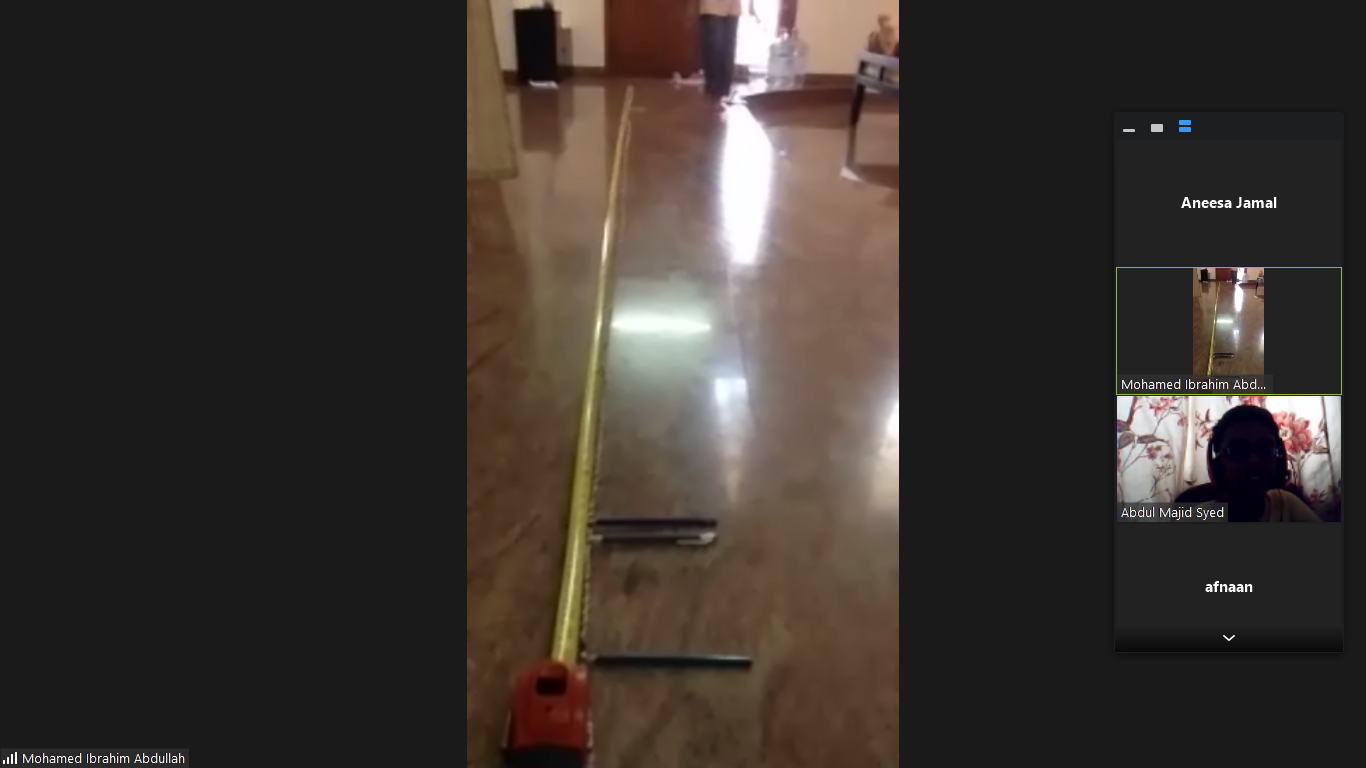
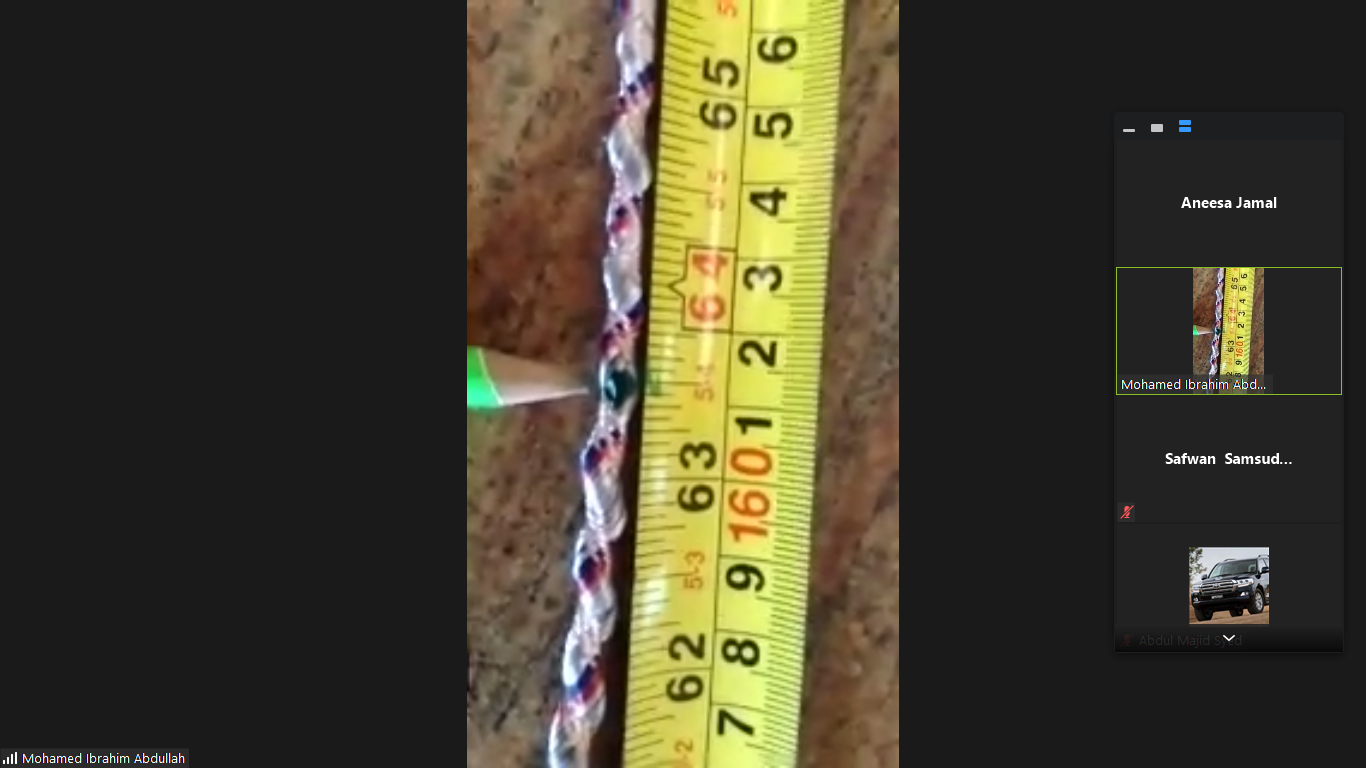
Once exposed to the concept of scale, students had to create timelines using string. Due to lockdowns, we had to do this activity online - with each team member in a different house! The first team was tasked with plotting events from the Big Bang on a 20 ft string, while the second team plotted key events in human history on a similar sized string. It was a fascinating activity as each group translated the years into proportionate distances on the string. Team A hit a wall when they realised that their measure of feet and inches was too large to represent the micro distance of human existence on the string representing the history of the universe. Team B, meanwhile, quickly translated their unit into metres, centimeters and millimeters - making their task much easier. After much work punching in numbers, calling out answers, measuring and marking on unwieldy string, both teams successfully completed the task. When they laid out the string - stretching across one student’s living room and another’s bedroom to hall to kitchen, kids got a glimmer of understanding about scales.  Honestly, this felt more like a math class than a history class.


.


Another activity which brought home the concept of zooming out to see a bigger picture involved a presentation where only partial bits of a picture are revealed in each slide. We did this as a class activity and I encouraged the children to share their observations as I kept scrolling through the presentation. They thought the first picture was a robe or a starfish but as we zoomed out we saw it was the crest of a rooster. As we kept zooming out a story started building up. There were many Aahs and Oohs as the students were surprised to see how the storyline kept changing. It was encouraging to note that they demonstrated sharp observation skills - spotting the cruise liner before it came into view, identifying the TV perspective of a picture and even that an image was actually a postal stamp. The underlying message that perspectives change as we see the bigger picture was subtly put across.


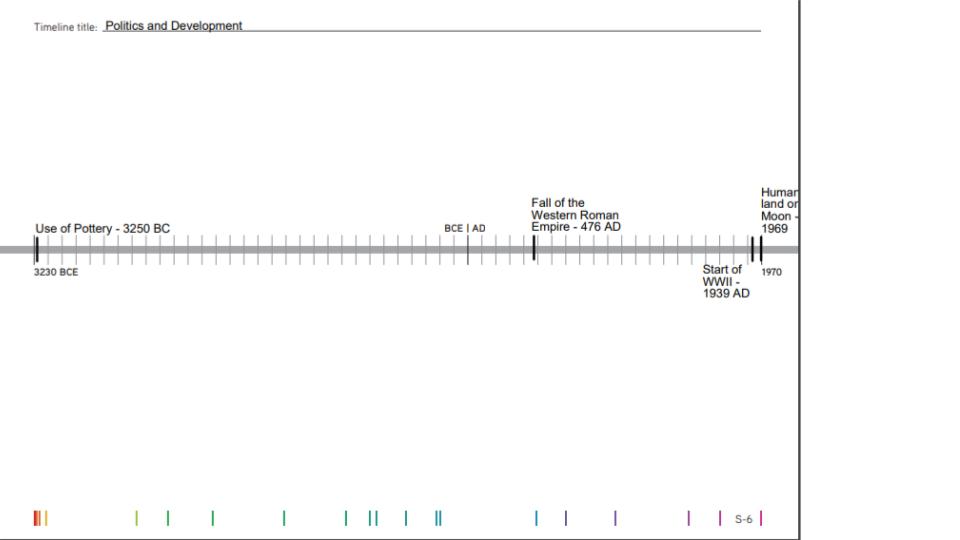
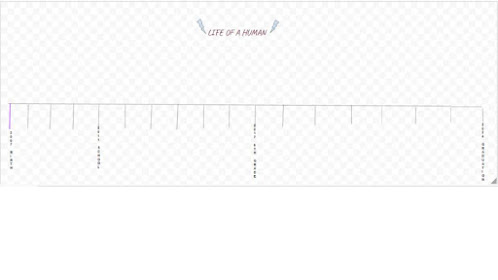
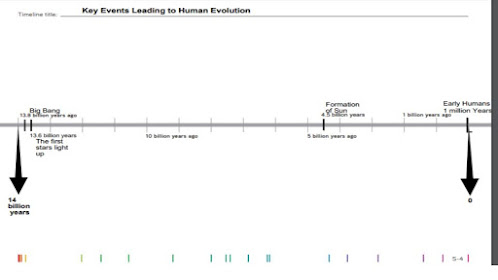
The culminating activity for the Unit on Scale had children plotting events on different timelines. I held this class on Zoom and used the Breakout Room feature to divide the students into 4 groups. Two of the timelines spanned a vast number of years - Timeline 1 started at the Big Bang and ended with the Coming of Humans. Timeline 3 covered human history from the 3rd Millennium to man’s landing on the moon. The other two timelines dealt with a single human’s history - Timeline 2 required students to plot Newton’s life and Timeline 4 had children plotting their own timeline. The students are now quite digitally savvy - what with 4 months of online schooling and could comfortably use DocHub to plot the dates.  The follow up discussion was very interesting. I started off by asking them what was common to the 1st and 3rd timelines, which set them apart from 2 & 4. Shakil said they were about development. Izzy clarified that they were about the development of humans from the Big Bang. Heartening to note that children have internalised the concept that human history has its origins in the Big Bang, that it doesn’t makes sense to start studying it from the advent of writing. They all shared the titles they had given to their charts - “Key Events in Human History”, “Politics and Development”, “Life of Issac Newton” and “Life of a Human”.


 I brought the discussion back to comparing and contrasting the four timelines. They postulated that two covered individual lives and others had sundry events. However, they still hadn’t come round to noticing the difference in scale. Then Ibrahim spoke up - “Two are really spread out and the others are condensed.” Finally!! I asked them if they could put all these timelines together onto a single timeline. Hana said it wouldn’t make sense. “The scales are different, the sizes are different.” Abdul Aziz thought we would need the same scale, but that would pose problems. Izzy pointed out that we could use different scales, a prelude to what they will see on the BHP Timeline with bends in the scale. I’m thrilled she already had come to the conclusion without first seeing how the BHP timeline would handle this issue. They did realise that a lot of the events, especially the human timelines would become insignificant on a full united timeline. We discussed the different kinds of timelines. While they all had used the left to right, being Arabic readers, they could relate to timelines that would go from right to left. They have also seen vertical timelines in encyclopedias at schools. Izzy then asked “Could we have a timeline as a network or web? Like a mindmap?” That sounds exciting but honestly, I’m not sure how that would work out - we are so used to viewing history in a linear fashion. 

Upcoming units in the introductory section will have students learning about origin stories from different cultures, understanding how knowledge is created and imparted, how claims should be tested, and back to a unit on measurement. Further sections will dive into each of the thresholds of Big History.


An important part of the Big History course is that it helps students build the interdisciplinary skills they would require for studying history. Hence we have learned about creating vocab walls, played a scavenger hunt to explore the  website, started maintaining a personal vocabulary list. One of the most helpful tools is the 3 Close Reads - which teaches students how to read complex non fiction texts with comprehension - a skill which is cross-disciplinary and will help students in all subject areas. Another tool is a guide on facilitating class discussions - where students are encouraged to argue their point of view using evidence and also challenge each other’s thinking in a productive way.


Keep tuned for more blogs on how we are progressing through this course. 


Aneesa Jamal


Teaching Visual Critical Thinking - V - Hazmat Suit in New York?

 
I was dead certain that my 8th graders would not be able to solve this “What’s Going On With This Picture” mystery from The New York Times Learning Network. This picture was potentially so misleading from their perspective -  I was sure they would jump to the obvious conclusion about epidemics given the current COVID pandemic scenario.  

I shared the picture on the screen and instructed the students to spend 5 minutes quietly observing and noting down their thoughts. The driving question was “What do you think is going on in this picture? Justify your answer.” 

Fathima thought that this picture had something to do with COVID. But the other students disagreed. They commented that it was an old picture - the photograph was in black and white and the cars looked old. The checked shirt was a giveaway. So were the “preppy” clothes worn by the little girls and the dress worn by the lady. I pointed to the bell bottoms the man was wearing and told the kids these were in fashion in the 70s.  They guessed that the location was London or Western city. Obviously, something was wrong, because people were staring at this man! The children’s responses indicated that, they not only noticed details, but were able to extend and correlate their thinking with other learning.

The students noticed how the central figure was togged up. I explained it was a Hazmat suit, worn to protect the wearer from dangerous substances. They commented how he also had on a gas mask and his feet were completely covered.  Hana wondered why anyone would walk down a street dressed like that. 

Abdul Aziz thought the photograph may have been taken during the Spanish Flu era. Others countered that only the central figure was in a hazmat suit, the other people in the picture were not even wearing masks. He responded “Maybe it was the beginning of the epidemic so people were not aware.”  Another student rebutted saying that the cars were clearly not from the 20’s,  I told them about the Ford’s Model T which was a popular car during the Spanish Flu times, and that these cars were more modern.  Izzy noticed that the quality of the picture was too good for it to have been from the 20’s. Abdul Aziz retorted that the picture might have been clicked towards the end of the Spanish Flu epidemic - and there was still some cleaning to do. The interaction showed the nascent ability to engage productively in a group discussion by challenging another’s opinion respectfully and rebutting using evidence. 

 But they still couldn't resolve why this one particular man was dressed in protective clothing while others were walking around normally. 

Then, Izzy noticed that he was carrying something in his right hand. Sana said maybe he was looking for something. Fathima thought it was a sanitizing device and he was trying to clean something toxic.  But what could be sanitised on the streets with this tiny device? Yara noticed the device was connected to the box this man was carrying.  They wondered if he was searching for a bomb or something hazardous.  But I queried “Wouldn’t the entire street have been cordoned off, if there was a bomb around?” They agreed. Yara hypothesized that maybe the stick was some kind of a detector. But again, what could it be detecting on a busy street that required the use of a hazmat suit? Fathima guessed “Radioactivity?”

Khalifa who had been silent so far, suddenly interjected and spoke his mind “He’s just showing a new device and getting attention!” I guess he was fed up with this mysterious fellow in the picture. I applauded his totally “out of the box” guesswork. Ziya had typed in the same guess in the chat box. Hana took up on the clue and posited “Maybe an ad!” Abdul Aziz followed up with “Maybe he’s raising awareness on government orders.” Impressive how the children started zooming in on the solution. Kids always demonstrate how they can guess and think in unstructured ways. 

I asked them to think in what circumstances such suits are worn? Khalifa jumped in “Nuclear sites!” “Maybe the government wants to start a nuclear site and he is protesting” hazarded Majid. Bang on!! (Excuse the pun!) 

I revealed the solution - this man was raising awareness about an upcoming anti-nuclear rally which was held in 1979, a few months after the Three Mile Island meltdown in New York. I congratulated the children on their teamwork - where they developed on each other’s ideas and smart guesswork based on solid observation skills. I was impressed that the children solved a “mystery” about an event they had never even heard about. On their part, the children said they enjoyed the session because they are forced to brainstorm, solve a puzzle, set forth their opinions and argue. A win all around!

Aneesa Jamal


Note : Student chosen aliases have been used instead of real names.  Due to copyright restrictions, the actual picture cannot be reproduced. Instead a student drawn illustration has been used and a link to the actual picture has been provided in the article as well as below:


https://www.nytimes.com/2019/10/06/learning/whats-going-on-in-this-picture-oct-7-2019.html

Au Revoir

  Au Revoir  The crucible moment came for me when, 16 years ago, I pulled my 7 year old son from school. Once again. Thrice in four years. W...